
Best SEO Strategies for E-Commerce Websites: A Complete 2026 Guide
Finding the best SEO strategies for e-commerce websites is the single biggest lever an online store owner has for building traffic that doesn’t disappear the moment ad spend stops. With global online retail sales climbing toward the trillions and thousands of new stores launching every day, ranking organically is no longer optional — it’s survival. This guide walks through the best SEO strategies for e-commerce websites, from keyword mapping to schema markup, so you can build a store that Google, AI search engines, and real shoppers all trust.
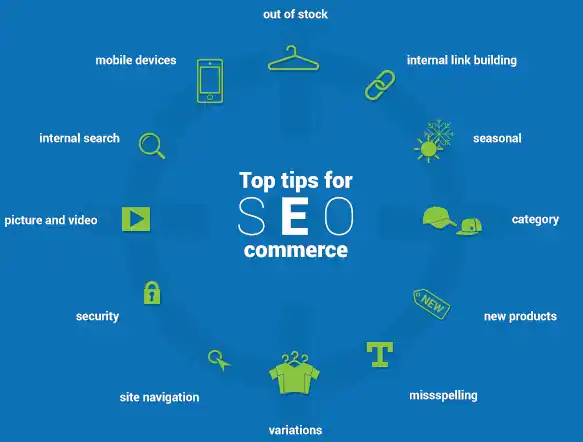
Why E-Commerce SEO Is Different From Regular SEO
Standard SEO usually deals with a handful of service pages or blog posts. E-commerce SEO has to manage thousands of product variants, filtered category URLs, seasonal inventory, and duplicate-content risk from manufacturer descriptions. That’s why the best SEO strategies for e-commerce websites treat catalog architecture, not just content, as a ranking factor. Understanding this distinction is the first step toward choosing the best SEO strategies for e-commerce websites, whether you run a small Shopify shop or an enterprise Magento catalog.
Search Intent Comes First
Before writing a single page, map the intent behind each query:
- Informational – “how to choose running shoes”
- Commercial investigation – “best wireless earbuds”
- Transactional – “buy noise-cancelling headphones online”
Matching intent to page type (blog vs. category vs. product) is the foundation of every effective e-commerce SEO strategy.
Foundational SEO Strategies for E-Commerce Websites
Every strategical list of SEO for e-commerce websites starts with two pillars: keyword mapping and technical health. Get these right and everything else — content, links, schema — has a stable base to build on.
1. Keyword Research and Mapping
Every strong campaign starts with keyword research: broad category terms, subcategory modifiers, brand terms, SKU/fitment terms, and commercial qualifiers like “buy,” “near me,” or “wholesale.” Tools like Google Search Console, GA4, Semrush, and Ahrefs help you assign one primary keyword per URL so pages don’t compete with each other.
2. Technical SEO for E-Commerce
Technical health underpins every other tactic. Priorities include:
- Fast page speed and Core Web Vitals
- Mobile-first, secure (HTTPS) architecture
- Clean, shallow URL structure (fewer than 3 clicks from homepage)
- Canonical tags to control faceted-navigation duplication
- XML sitemaps and smart crawl-budget management
On-Page Optimization: Category and Product Pages
On-page work is where many of the best SEO strategies become visible to shoppers, not just crawlers.
Category Page Optimization
Category pages should target broader commercial terms and include unique intro copy, internal links to subcategories, and breadcrumb navigation — a structural signal Google explicitly recommends for e-commerce sites.
Product Page Optimization
Avoid copying manufacturer descriptions. Write original copy that covers features, materials, sizing, and use cases. Add genuine customer reviews; Google’s algorithm increasingly favors stores with user-generated content.
Metadata Best Practices
- Title tags: front-load the primary keyword
- Meta descriptions: include a clear benefit and a call to action
- Image alt text: descriptive, keyword-relevant, never stuffed
Content Strategy and Blogging
A blog built around pillar content like the best SEO strategies for e-commerce websites lets you capture top-of-funnel informational searches and internally link toward high-priority product and category pages. Publish on a consistent schedule and refresh older posts — content freshness is a recognized quality signal. To view more such blogs connect the Digitalbiont blog page.
Frequently Asked Questions
1.What are the best SEO strategies for e-commerce websites in 2026?
The best SEO strategies for e-commerce websites combine keyword-to-page mapping, technical health (speed, mobile, canonicals), unique product/category copy, structured data, authoritative backlinks, and AI-search-ready content.
2. How long does e-commerce SEO take to show results?
Most stores see meaningful organic movement within 4–6 months, though competitive categories can take longer.
3. Do I need a blog for e-commerce SEO?
Yes — a blog captures informational searches and builds internal links to commercial pages, which is core to any e-commerce SEO strategy.
4. Is schema markup mandatory?
Not mandatory, but strongly recommended; it improves rich-result eligibility and AI-search comprehension.